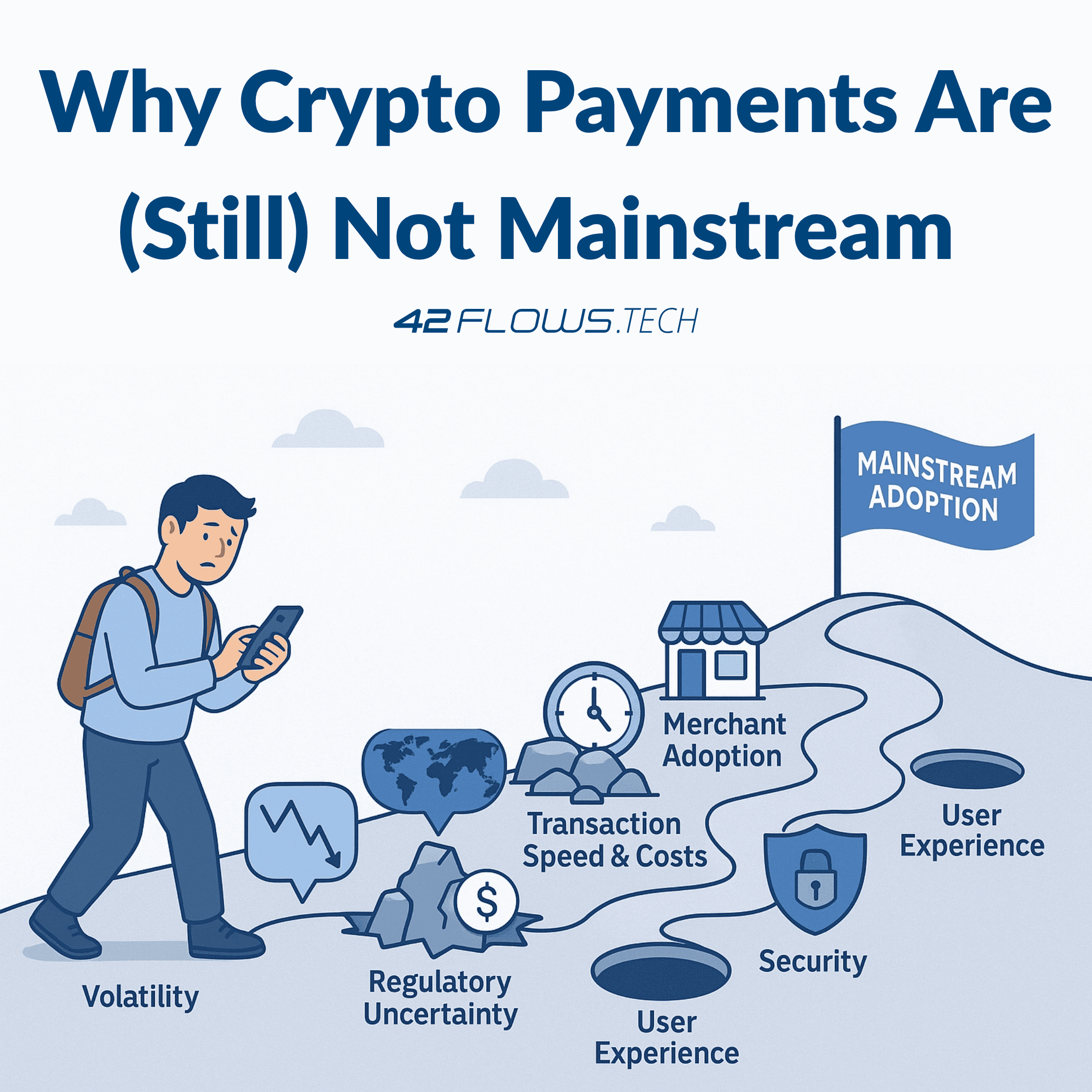
Crypto payments have been a hot topic for years, with supporters claiming they will transform financial operations by offering fast, borderless, and low-cost transactions. Yet, in 2025, crypto payments still haven’t gone mainstream. While Bitcoin, Ethereum, and stablecoins are widely recognized, they remain a niche payment method. Why? Let’s explore the everyday conversations and real-world challenges that continue to hold back crypto adoption in payments.
1. Volatility: Would You Accept a Salary in Bitcoin?
One of the most common concerns is price stability. Crypto markets are notoriously volatile, with prices swinging by double-digit percentages in a single day. This raises practical issues:
- Merchants fear accepting crypto, only to see its value drop before they can convert it.
- Consumers hesitate to spend crypto, hoping it will appreciate in value instead.
- Stablecoins attempt to solve this, but regulatory scrutiny has made their adoption uncertain.
2. Regulatory Uncertainty: Is It Even Legal?
Governments worldwide are still debating how to regulate crypto payments. In everyday discussions, people ask:
- “Will my country ban crypto payments overnight?” Several governments have imposed restrictions, making businesses hesitant to integrate them.
- “What are the tax implications?” Crypto transactions can trigger taxable events, adding complexity for both consumers and businesses.
- “How does this comply with AML/KYC regulations?” Many jurisdictions now require strict compliance, making seamless crypto transactions harder to execute.
3. Transaction Speed and Costs: Faster Than Banks?
Crypto payments are often praised for being fast and cheap, but in reality, network congestion can cause delays and high fees:
- Bitcoin transactions can take 10 minutes or more and may have high fees during peak times.
- Ethereum gas fees fluctuate unpredictably, making small transactions impractical.
- Layer-2 solutions (e.g., Lightning Network, Polygon) help, but adoption is inconsistent, and not all merchants support them.
4. Security Concerns: What If I Get Scammed?
A major discussion point among skeptics is the irreversible nature of crypto transactions:
- “What if I send money to the wrong address?” There’s no customer service to reverse the transaction.
- “How do I get a refund?” Chargebacks, a staple of traditional finance, don’t exist in crypto.
- “What if my wallet is hacked?” Unlike banks, there’s no way to recover stolen funds without centralized intervention.
5. Merchant Adoption: Where Can I Actually Use Crypto?
While some big brands accept crypto, the reality is that crypto payments are not widely available for everyday purchases:
- Small businesses see no demand from customers, so they don’t invest in crypto payment solutions.
- Payment processors like Visa and Mastercard offer crypto debit cards, but these still rely on converting crypto to fiat.
- Many merchants still prefer traditional payment systems due to their familiarity and stability.
6. User Experience: Is It Too Complicated?
For the average consumer, using crypto for payments is far from seamless:
- Setting up a wallet, securing private keys, and understanding transaction fees require technical knowledge.
- Many people still worry about making mistakes, like losing access to their funds permanently.
- The user experience is improving, but mainstream adoption requires it to be as easy as Apple Pay or Google Pay.
The Future: What Needs to Change?
For crypto payments to truly go mainstream, several things need to happen:
- More stable and regulatory-compliant digital assets (CBDCs or fully backed stablecoins).
- Wider merchant adoption through seamless integration with existing payment networks.
- Better user experience with simple, secure, and foolproof wallets.
- Stronger fraud protection mechanisms without compromising decentralization.
- Lower and more predictable transaction fees for everyday purchases.
Conclusion
Despite its potential, crypto payments still face real-world challenges that prevent them from becoming a dominant payment method. Until volatility, regulation, security, and usability improve, most people will continue to rely on traditional financial systems. However, the industry is evolving rapidly, and with the right advancements, crypto payments could finally break into the mainstream.
Want to explore blockchain-based payment solutions for your business? Contact us today! Email us at success@42flows.tech, and we will help you implement an effective strategy.




 Maksym Popov