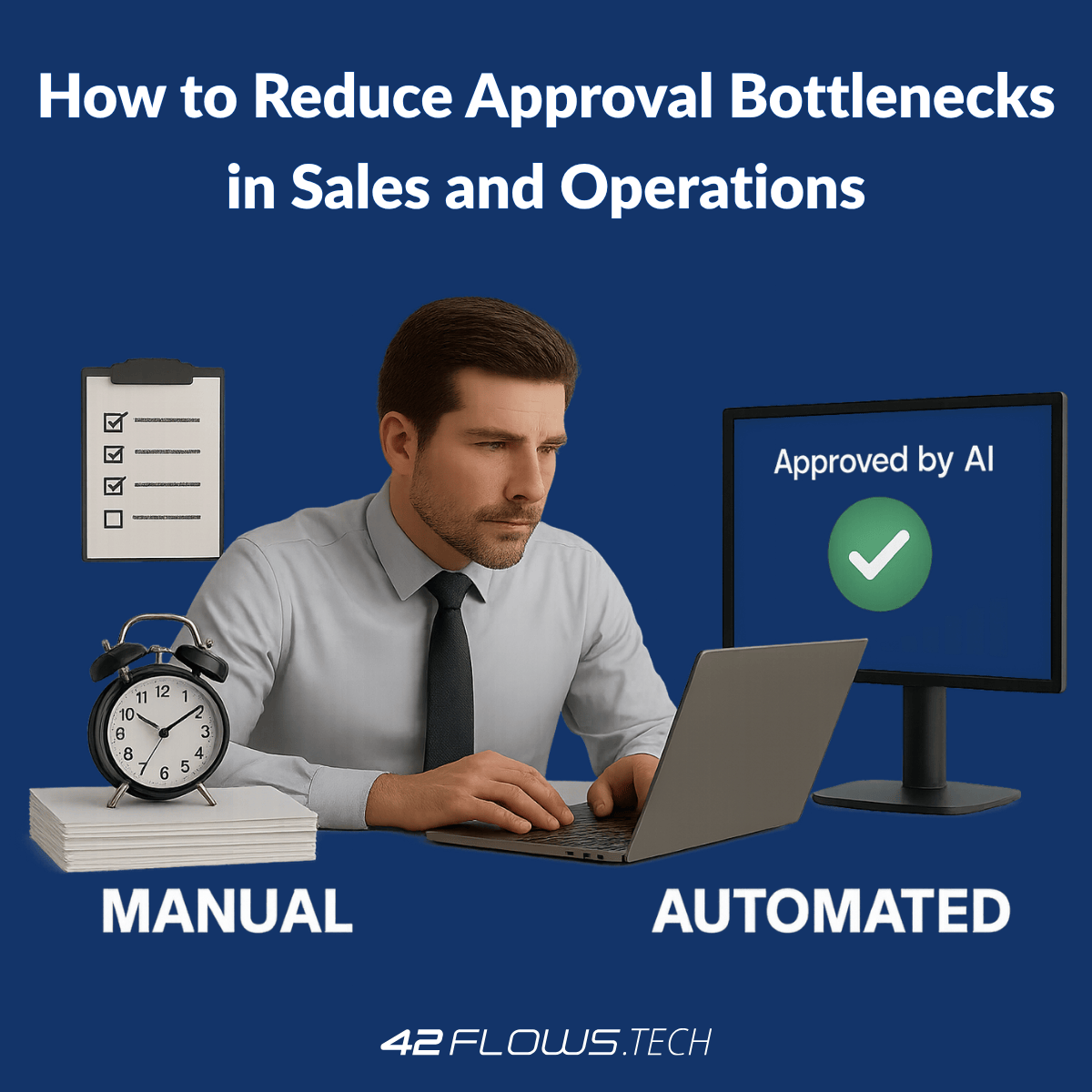
In fast-moving industries like finance, fintech, and B2B sales, speed is a competitive advantage. Yet, many organizations still struggle with approval bottlenecks—where deals, budgets, or operational decisions get stuck waiting for validation.
These delays don’t just slow down internal processes; they also frustrate customers, reduce revenue opportunities, and hinder scalability. The longer an approval takes, the higher the chance that a prospect loses interest, an internal project stalls, or a competitor steps in.
But what if approvals could be automated, streamlined, and made smarter using AI-driven decision frameworks? This article explores how AI helps businesses reduce approval delays, enhance qualification accuracy, and ensure operational efficiency.
1. Why Do Approval Bottlenecks Happen?
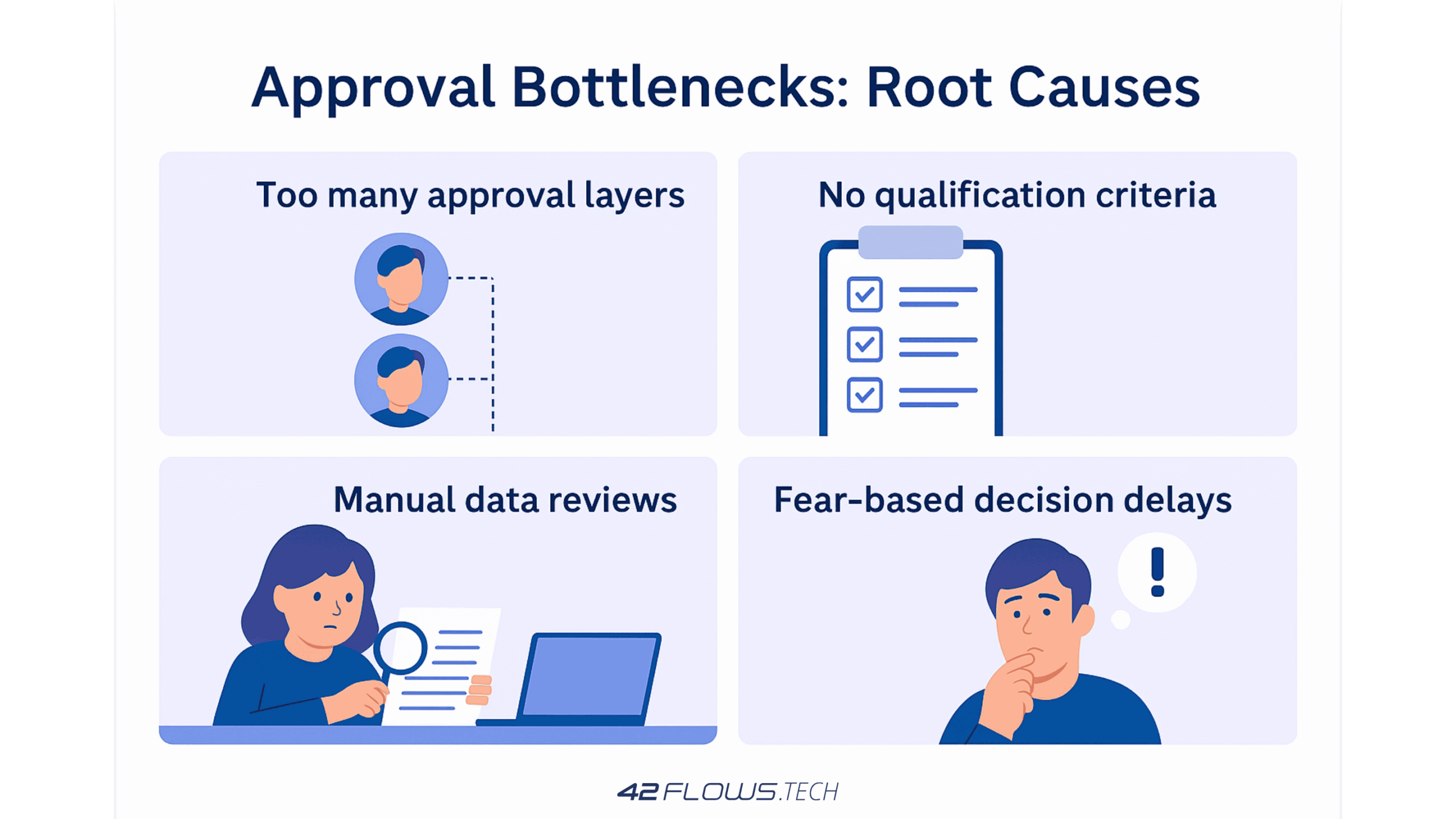
Before solving the problem, it is important to understand its root causes. Approval bottlenecks in sales and operations usually stem from:
Multiple Layers of Decision-Making
- Sales reps need managerial approval before finalizing deals.
- Operational teams wait for cross-department sign-offs before executing projects.
- High-value transactions require legal and compliance review before moving forward.
Lack of Clear Qualification Criteria
- Sales teams often rely on gut feeling rather than structured qualification processes.
- Operational teams may lack data-backed risk assessment tools to make quick decisions.
Manual Review and Data Gathering
- Teams waste time manually verifying information instead of using automated validation systems.
- Decision-makers struggle to access historical data, leading to unnecessary back-and-forth.
Risk Aversion and Perfectionism
- Teams hesitate to approve proposals due to fear of compliance violations, financial losses, or reputational risks.
- Decision-makers prefer to triple-check everything, leading to excessive delays.
2. How AI-Driven Frameworks Eliminate Approval Delays
AI and automation allow businesses to validate, qualify, and approve decisions faster while maintaining accuracy and compliance.
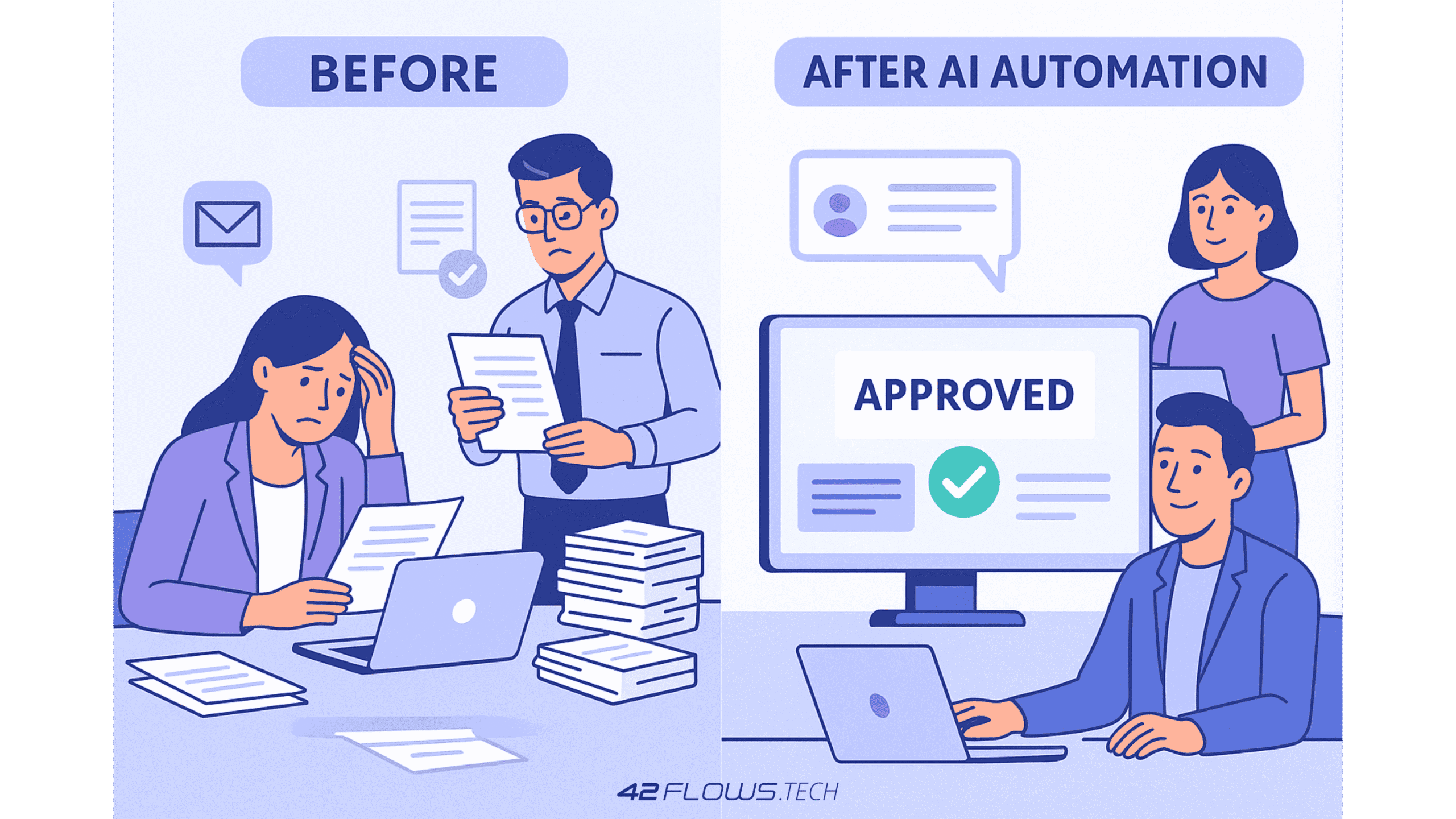
AI-Powered Lead Qualification and Sales Approval
Instead of requiring manual approval for every deal, AI can instantly assess opportunities based on predefined qualification frameworks.
- AI-driven scoring models analyze leads based on budget, company size, industry fit, and engagement history.
- Automated risk analysis flags high-risk deals that require human intervention while approving low-risk ones instantly.
- AI-generated approval recommendations provide sales managers with pre-validated deal insights.
A fintech company using AI-based lead scoring reduced sales cycle delays by 40 percent, allowing its team to focus on high-potential prospects.
Smart Proposal and Pricing Approvals
AI can help automate pricing validation and ensure that custom proposals align with company policies.
- Pre-configured pricing rules ensure discounts and deals stay within approved margins.
- AI-driven contract validation checks for compliance before sending proposals for final approval.
- Dynamic pricing models allow instant approval of discounts based on real-time market conditions.
A B2B SaaS provider integrated AI into its proposal system and reduced approval wait times from three days to a few hours.
AI for Compliance and Risk-Based Approvals
AI-powered compliance tools can validate transactions, vendor agreements, and financial approvals without requiring manual intervention at every step.
- Automated document verification eliminates the need for human review in low-risk cases.
- AI-driven fraud detection identifies potential red flags before approvals.
- Real-time compliance monitoring ensures that approvals adhere to regulations without delays.
A financial institution used AI for Anti-Money Laundering (AML) checks, cutting approval times by 50 percent while improving accuracy.
Workflow Automation and Instant Notifications
Even when approvals need human oversight, AI can accelerate the process by reducing friction.
- Automated workflows ensure that approvals are routed to the right decision-makers instantly.
- AI-driven reminders prevent deals from getting lost in email chains.
- Priority-based escalation flags urgent requests for faster action.
An enterprise logistics company used AI-driven workflow automation and reduced operational approval times by 60 percent.
3. Implementing an AI-Driven Approval System
To successfully integrate AI into sales and operational approvals, businesses need a structured approach.
Identify Key Approval Bottlenecks
- Which decisions take the longest?
- Where do deals or projects get stuck?
- What information is missing at approval checkpoints?
Define Qualification and Validation Criteria
- What factors determine a strong lead, deal, or operational request?
- Which approvals can be automated, and which require human oversight?
- What are the risk thresholds for automatic versus manual review?
Implement AI-Powered Decision Engines
- Integrate AI-powered lead scoring models into sales CRMs.
- Automate proposal validation with AI-driven contract analysis.
- Use real-time risk assessment models for compliance approvals.
Monitor, Adjust, and Optimize
- Track the time saved per approval after AI implementation.
- Continuously refine AI based on feedback from decision-makers.
- Ensure AI-generated recommendations are aligned with business goals.
Conclusion
Slow approvals kill momentum in sales and operations. The longer a deal or project sits in limbo, the greater the chance of losing the opportunity. AI-driven validation frameworks allow businesses to approve the right decisions faster—without sacrificing accuracy, compliance, or risk control.
At 42Flows, we help businesses integrate AI-powered automation to streamline sales and operational processes. If your company is struggling with approval delays, let’s explore how AI can eliminate bottlenecks and improve efficiency.
Contact us at success@42flows.tech to start optimizing your workflows today.