Digital banking has evolved from an online add-on to a mobile-first experience. Today, most users expect to manage their finances directly from their smartphones, whether checking balances, transferring funds, or applying for loans.
Mobile-first banking is no longer just a competitive advantage—it is a necessity. Banks and fintech companies that fail to prioritize seamless mobile experiences risk losing customers, falling behind competitors, and struggling with low engagement rates.
This article explores why mobile-first design is essential, how it impacts customer retention, and best practices for creating intuitive, high-performance digital banking apps.
1. The Shift to Mobile-First Banking
1.1 The Numbers Don’t Lie: Mobile Banking Dominates
- Over 76% of global banking interactions now happen on mobile devices.
- Gen Z and Millennials prefer mobile banking over visiting physical branches.
- 40% of users will switch banks if their mobile experience is slow or difficult to navigate.
Mobile is now the primary banking channel, not just an alternative. Banks that fail to prioritize mobile-first design risk losing their digital customers entirely.
1.2 What Customers Expect from Mobile Banking
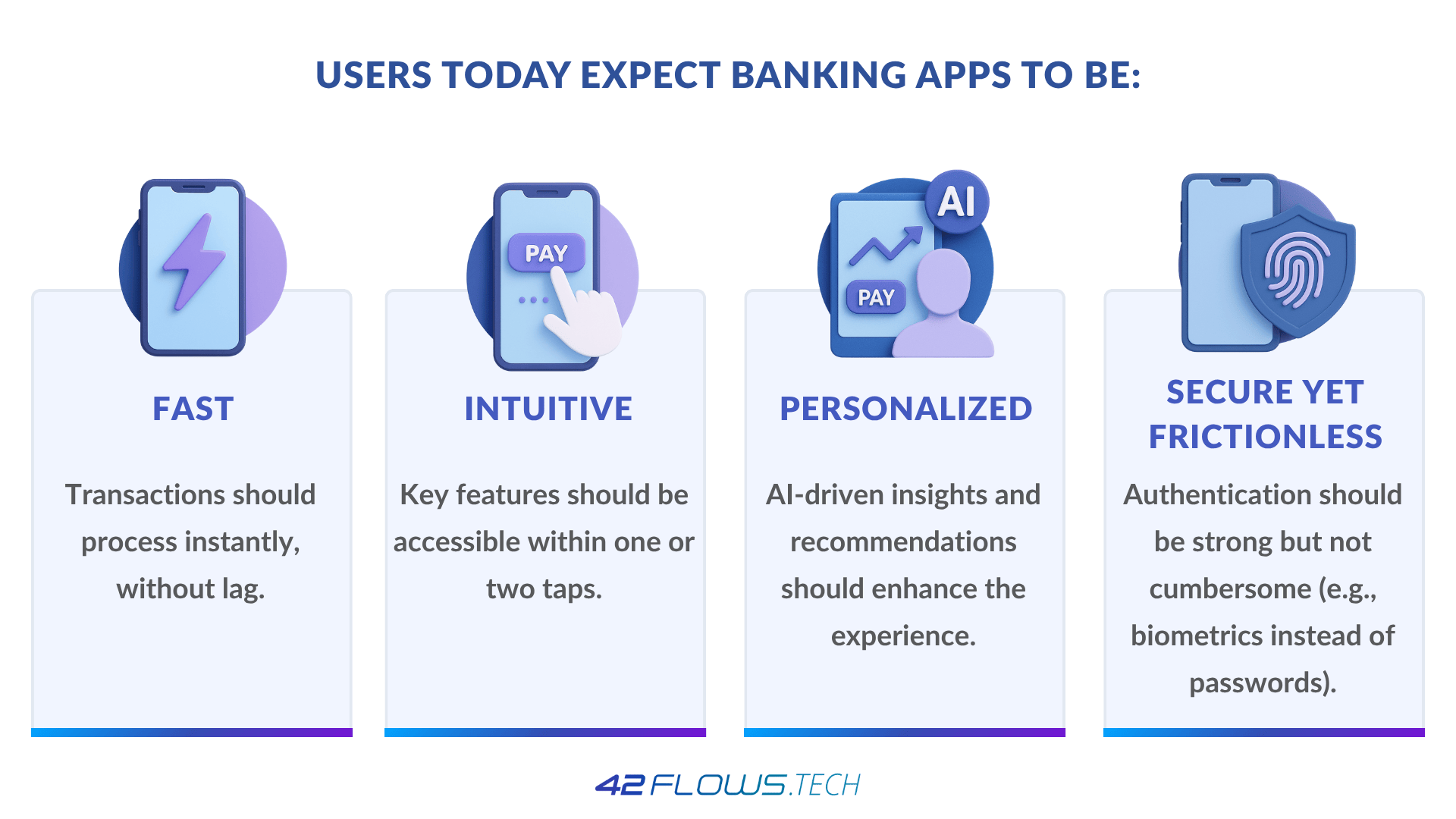
2. Why Mobile-First Design is a Game-Changer for Banks
2.1 Increased Customer Retention and Engagement
A well-designed mobile banking app keeps users engaged by:
- Reducing friction in daily financial transactions.
- Providing real-time notifications for spending, deposits, and payments.
- Offering seamless digital onboarding without needing a branch visit.
2.2 Higher Conversion Rates for Financial Products
Mobile-first banking isn’t just about usability—it also boosts revenue.
- Banks using mobile-first design see 25-30% higher adoption of savings accounts, loans, and credit products.
- AI-driven personalization increases cross-selling of banking services.
2.3 Cost Savings for Banks and Fintechs
Shifting users to mobile-first self-service solutions reduces operational costs:
- Fewer in-branch visits mean lower staffing costs.
- Automated customer support (via chatbots) decreases call center expenses.
- Faster KYC verification leads to reduced onboarding delays.
3. Mobile-First vs. Mobile-Friendly: What’s the Difference?
Many banks mistakenly assume they have a mobile-first strategy when they actually have a mobile-friendly approach.
Feature | Mobile-Friendly Banking | Mobile-First Banking |
|---|
| Design Philosophy | Desktop-first, then adapted for mobile | Designed primarily for mobile UX |
| Navigation | Shrunk-down desktop menus | Optimized for one-hand navigation |
| Authentication | Password-based logins | Biometric authentication & One-Tap login |
| Speed & Performance | Slower, web-dependent loading | Fast, app-native interactions |
| Customer Experience | Functional but not seamless | Intuitive and frictionless |
If a banking app isn’t built with mobile-first UX principles, it won’t deliver the experience that today’s users expect.
4. Best Practices for Mobile-First Digital Banking
4.1 Optimize for Speed and Performance
- Use lightweight UI components to reduce load times.
- Enable instant payments and transactions to minimize friction.
- Implement offline capabilities for key functions like balance checks.
4.2 Focus on One-Handed Navigation
- Keep essential functions within thumb reach.
- Use bottom navigation bars instead of complex menus.
- Minimize form fields and allow autofill options.
4.3 Prioritize Frictionless Security
- Use biometric authentication (face/fingerprint recognition) instead of passwords.
- Enable adaptive security measures (e.g., step-up authentication only when needed).
- Ensure seamless card management, allowing users to freeze/unfreeze their cards instantly.
4.4 Personalize the Experience with AI
- Use AI-driven financial insights to help users manage spending.
- Provide real-time fraud alerts and predictive security measures.
- Offer customized product recommendations based on user behavior.
5. Real-World Example: How Mobile-First Strategy Led to Higher Retention
A European neobank redesigned its app with mobile-first UX principles, focusing on:
- Instant account creation (under 3 minutes).
- One-click bill payments and real-time spending notifications.
- Biometric authentication for security without friction.
Results:
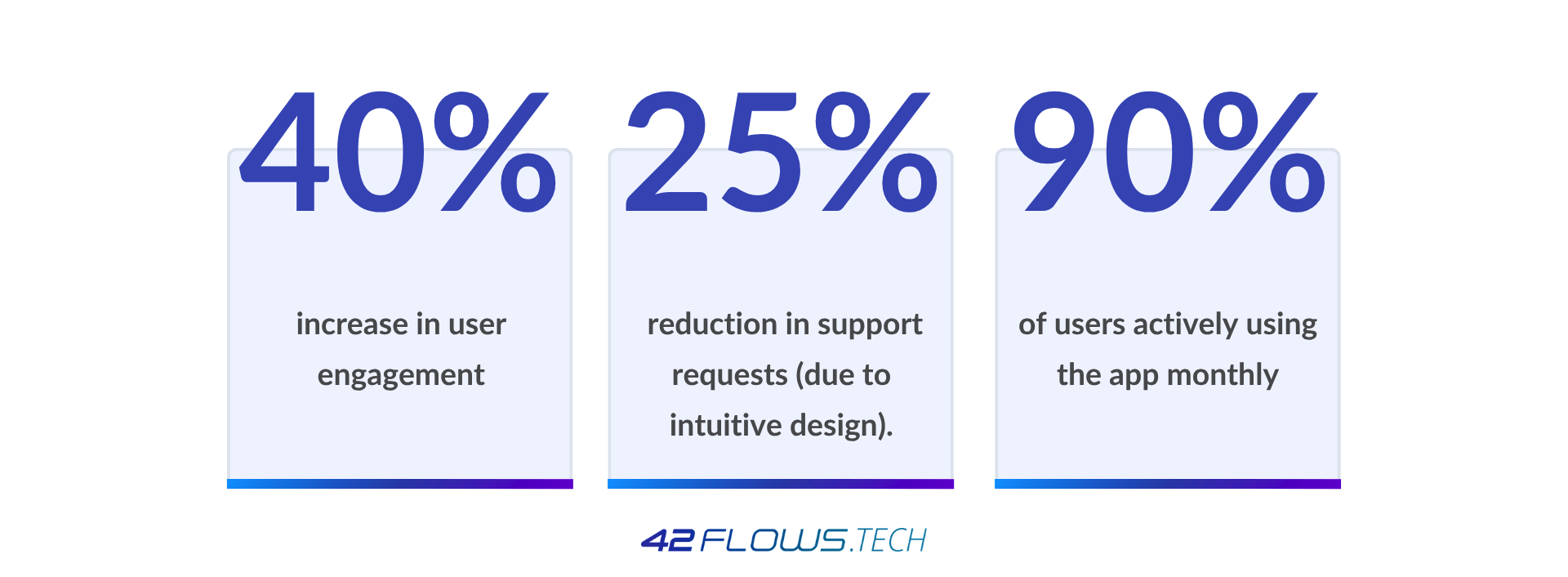
- 40% increase in user engagement.
- 25% reduction in support requests (due to intuitive design).
- Higher retention, with 90% of users actively using the app monthly.
Conclusion
The days of desktop-first banking are over. Mobile-first design is no longer optional—it is the standard.
Banks and fintechs that fail to prioritize mobile UX, optimize for performance, and personalize experiences will struggle to retain customers in an increasingly competitive market.
At 42Flows, we specialize in designing seamless, high-performance mobile banking experiences that keep customers engaged and loyal.
Looking to optimize your mobile banking experience? Contact us at success@42flows.tech to get started.




 Maksym Popov