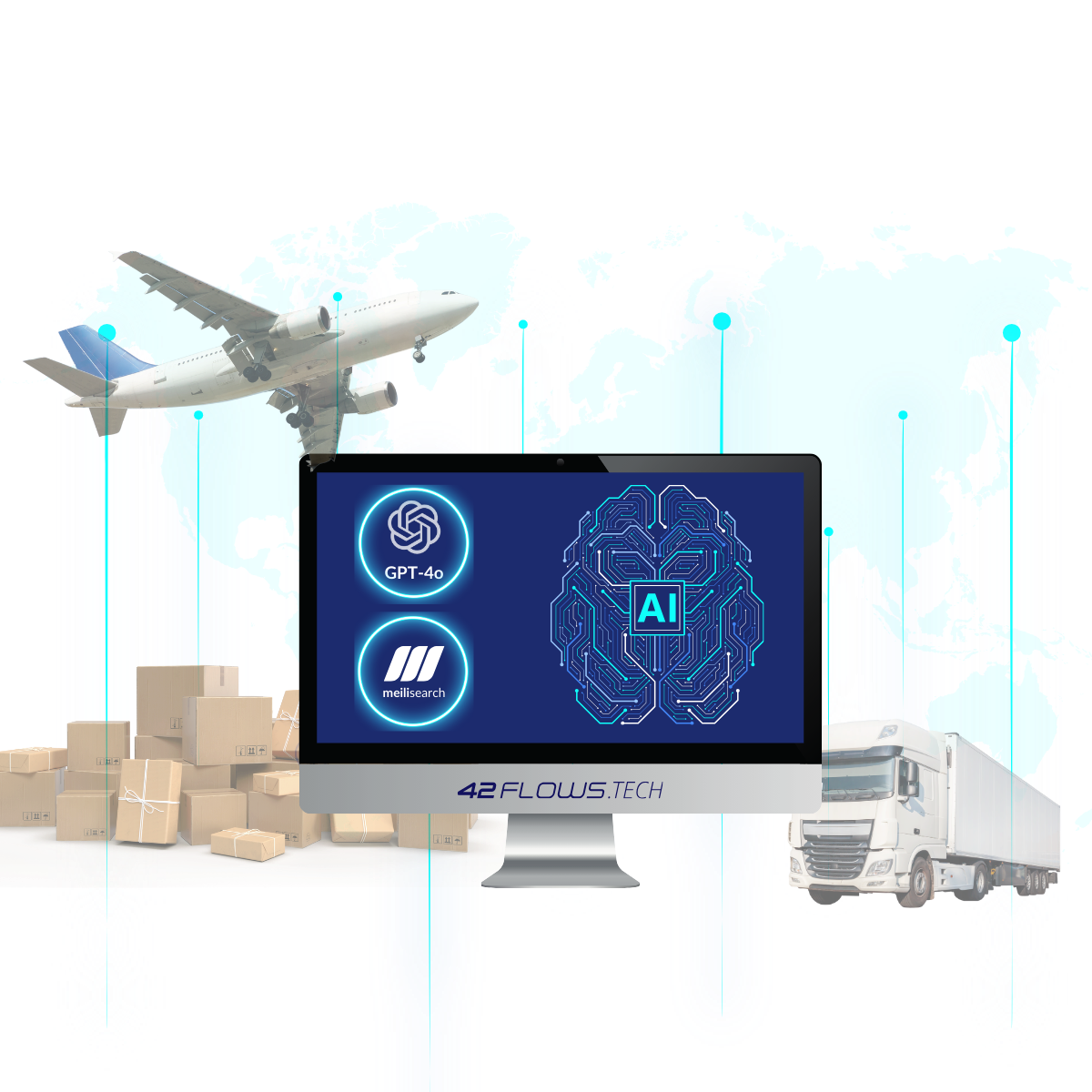

The automation of product classification is a key aspect for international logistics companies. Accurately determining product categories, which are essential for customs clearance of goods, requires significant precision and knowledge. The application of artificial intelligence, such as GPT-4, in combination with the Meilisearch database, significantly optimizes this process. Automating product classification not only reduces costs but also increases processing speed.
The process of determining the correct product category has always been a challenge for international companies. The category serves as a unique identifier for classifying goods that cross customs borders. An incorrect classification can lead to delays, fines, or even denial of delivery.
The traditional process involved manual entry of categories, which was time-consuming and prone to errors due to human factors. The challenge was to create a system that could ensure accuracy, speed, and scalability simultaneously.
Initially, our approach involved using the GPT-4o assistant API with a database of categories and product names. GPT-4o demonstrated high accuracy in determining product categories, but this approach was costly due to the large number of tokens required for processing each request.
For example, determining the category for a product like a “cat’s bed” could cost 3-5 cents per request, with each request consuming between 17,000 and 25,000 tokens. Such costs quickly became unfeasible for scalable solutions, especially with a large number of products.
In our second attempt, we decided to test a direct query to the GPT-4o API. This approach involved providing the product name along with scanning a photograph for more accurate identification. However, the results were disappointing. The accuracy of category determination fluctuated between 15-20%.
One of the main issues with this method was the discrepancy between the obtained values and the delivery database. Additionally, the system occasionally generated non-existent categories—a phenomenon known as “hallucination.” This meant that, despite the speed of obtaining results, accuracy remained in question, ultimately limiting the practical application of this approach.
In the third attempt, we decided to combine Meilisearch with GPT-4o by utilizing the product subcategory. This approach involved GPT-4o first determining the subcategory, after which Meilisearch performed a search for relevant category options.
Although this method improved accuracy to 55-60%, it still faced some challenges. The results did not always logically correspond to the queries, often relying on name and keyword matches from the knowledge base. This led to situations where the system suggested categories that made no sense in the context of specific products, highlighting the need to refine the algorithm for achieving higher accuracy.
To address the issue of high costs, we implemented a combined approach. The combination of GPT-4o for preliminary product classification and Meilisearch, which uses vector search to identify potential categories, allowed us to reduce the cost of queries to less than 1 cent.
This approach achieved an accuracy rate of over 90% with a significant reduction in costs per request, marking a key achievement in our automation system.
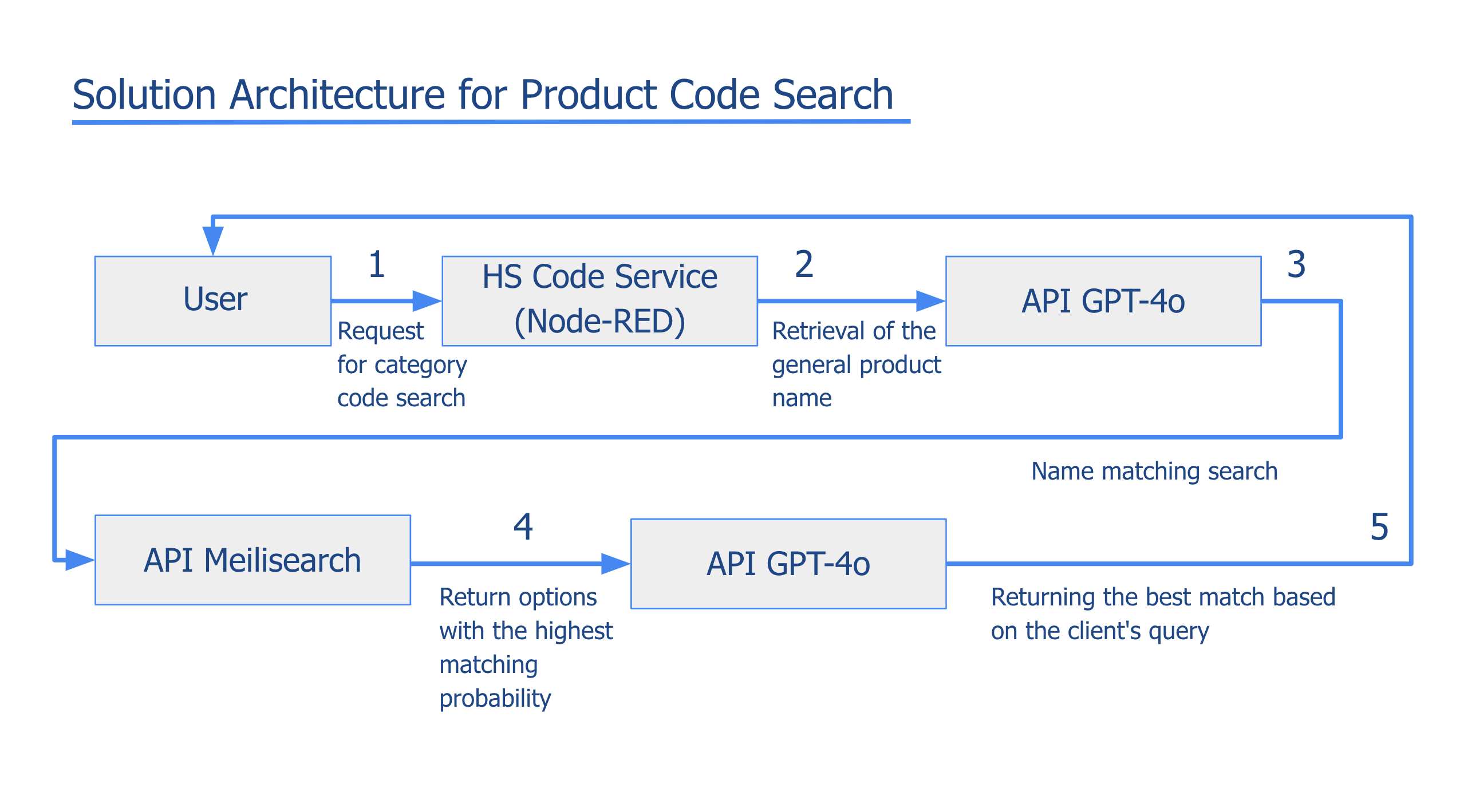
The Process of Automating HS Code Search
The use of GPT-4o and Meilisearch has significantly improved the speed and accuracy of processing international shipments. The process of determining the product category now takes no more than 20 seconds, reducing the workload on employees and helping to avoid mistakes.
For example, one of our clients now processes international shipments in 20 seconds instead of 2–90 minutes. The system automatically determines the product category, ensuring accuracy and speed without the need for manual intervention. Accuracy reaches over 90%, although there is sometimes a need for managerial intervention for editing, and a small percentage of incorrectly identified products remains.
Automating product classification with artificial intelligence not only boosts productivity but also provides significant advantages for international companies:
The automation of product classification using GPT-4o and Meilisearch is an effective solution for international companies. By combining these technologies, companies can achieve high accuracy, reduce costs, and increase the speed of processing international orders. Implementing such solutions will help your business operate faster and more efficiently.
Do you want to automate the product classification process in your company and reduce costs? Contact us today! Email us at success@42flows.tech, and we will help you implement an effective solution.
You can learn more about our experience and expertise by reviewing the Case Studies and Blog sections.
The automation of product classification is a key aspect for international logistics companies. Accurately determining product categories, which are essential for customs clearance of goods, requires significant precision and knowledge. The application of artificial intelligence, such as GPT-4, in combination with the Meilisearch database, significantly optimizes this process. Automating product classification not only reduces costs but also increases processing speed.
The process of determining the correct product category has always been a challenge for international companies. The category serves as a unique identifier for classifying goods that cross customs borders. An incorrect classification can lead to delays, fines, or even denial of delivery.
The traditional process involved manual entry of categories, which was time-consuming and prone to errors due to human factors. The challenge was to create a system that could ensure accuracy, speed, and scalability simultaneously.
Initially, our approach involved using the GPT-4o assistant API with a database of categories and product names. GPT-4o demonstrated high accuracy in determining product categories, but this approach was costly due to the large number of tokens required for processing each request.
For example, determining the category for a product like a “cat’s bed” could cost 3-5 cents per request, with each request consuming between 17,000 and 25,000 tokens. Such costs quickly became unfeasible for scalable solutions, especially with a large number of products.
In our second attempt, we decided to test a direct query to the GPT-4o API. This approach involved providing the product name along with scanning a photograph for more accurate identification. However, the results were disappointing. The accuracy of category determination fluctuated between 15-20%.
One of the main issues with this method was the discrepancy between the obtained values and the delivery database. Additionally, the system occasionally generated non-existent categories—a phenomenon known as “hallucination.” This meant that, despite the speed of obtaining results, accuracy remained in question, ultimately limiting the practical application of this approach.
In the third attempt, we decided to combine Meilisearch with GPT-4o by utilizing the product subcategory. This approach involved GPT-4o first determining the subcategory, after which Meilisearch performed a search for relevant category options.
Although this method improved accuracy to 55-60%, it still faced some challenges. The results did not always logically correspond to the queries, often relying on name and keyword matches from the knowledge base. This led to situations where the system suggested categories that made no sense in the context of specific products, highlighting the need to refine the algorithm for achieving higher accuracy.
To address the issue of high costs, we implemented a combined approach. The combination of GPT-4o for preliminary product classification and Meilisearch, which uses vector search to identify potential categories, allowed us to reduce the cost of queries to less than 1 cent.
This approach achieved an accuracy rate of over 90% with a significant reduction in costs per request, marking a key achievement in our automation system.
The Process of Automating HS Code Search
The use of GPT-4o and Meilisearch has significantly improved the speed and accuracy of processing international shipments. The process of determining the product category now takes no more than 20 seconds, reducing the workload on employees and helping to avoid mistakes.
For example, one of our clients now processes international shipments in 20 seconds instead of 2–90 minutes. The system automatically determines the product category, ensuring accuracy and speed without the need for manual intervention. Accuracy reaches over 90%, although there is sometimes a need for managerial intervention for editing, and a small percentage of incorrectly identified products remains.
Automating product classification with artificial intelligence not only boosts productivity but also provides significant advantages for international companies:
The automation of product classification using GPT-4o and Meilisearch is an effective solution for international companies. By combining these technologies, companies can achieve high accuracy, reduce costs, and increase the speed of processing international orders. Implementing such solutions will help your business operate faster and more efficiently.
Do you want to automate the product classification process in your company and reduce costs? Contact us today! Email us at success@42flows.tech, and we will help you implement an effective solution.
You can learn more about our experience and expertise by reviewing the Case Studies and Blog sections.
Let’s talk. Just enter your details and we will reply within 24 hours.


 Maksym Popov