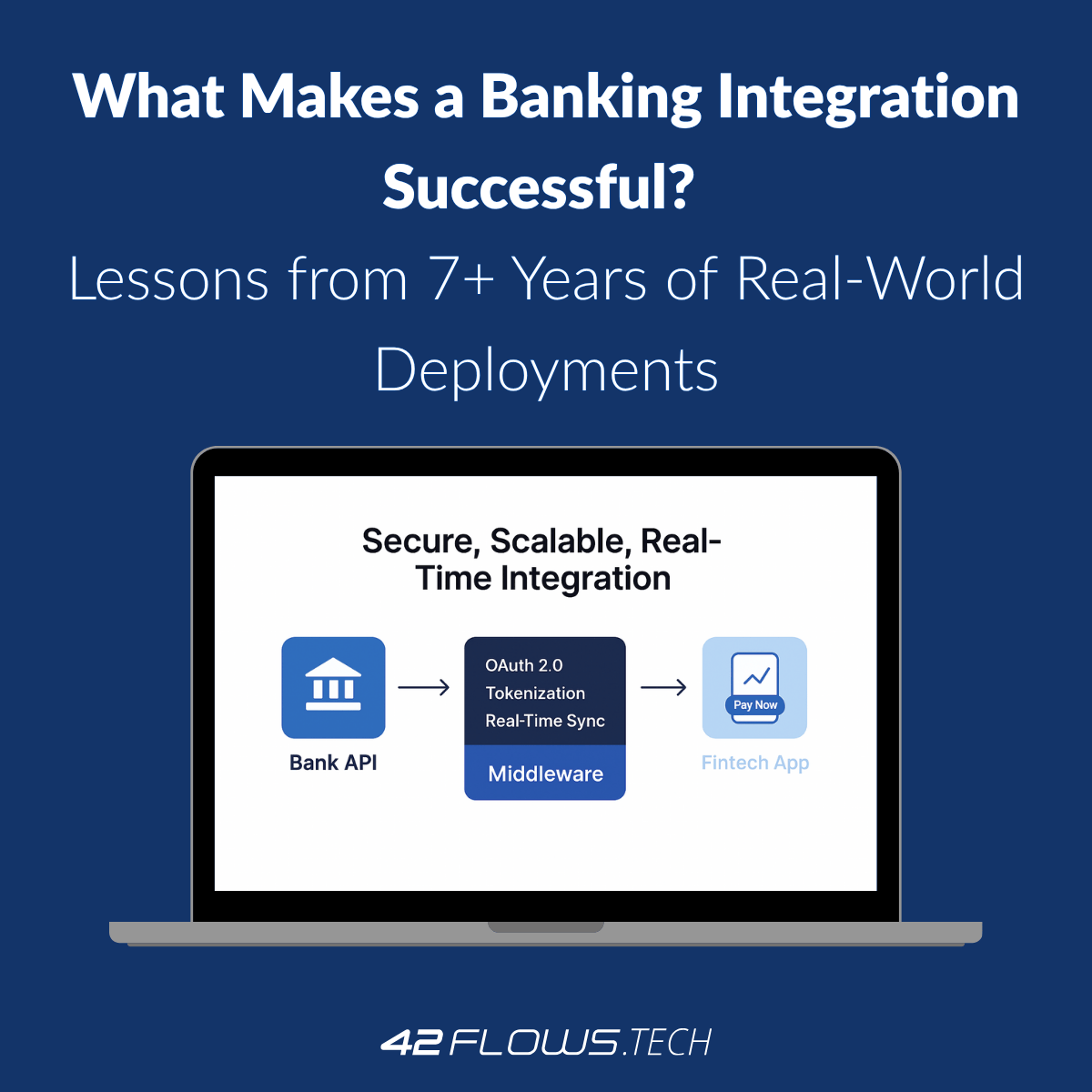
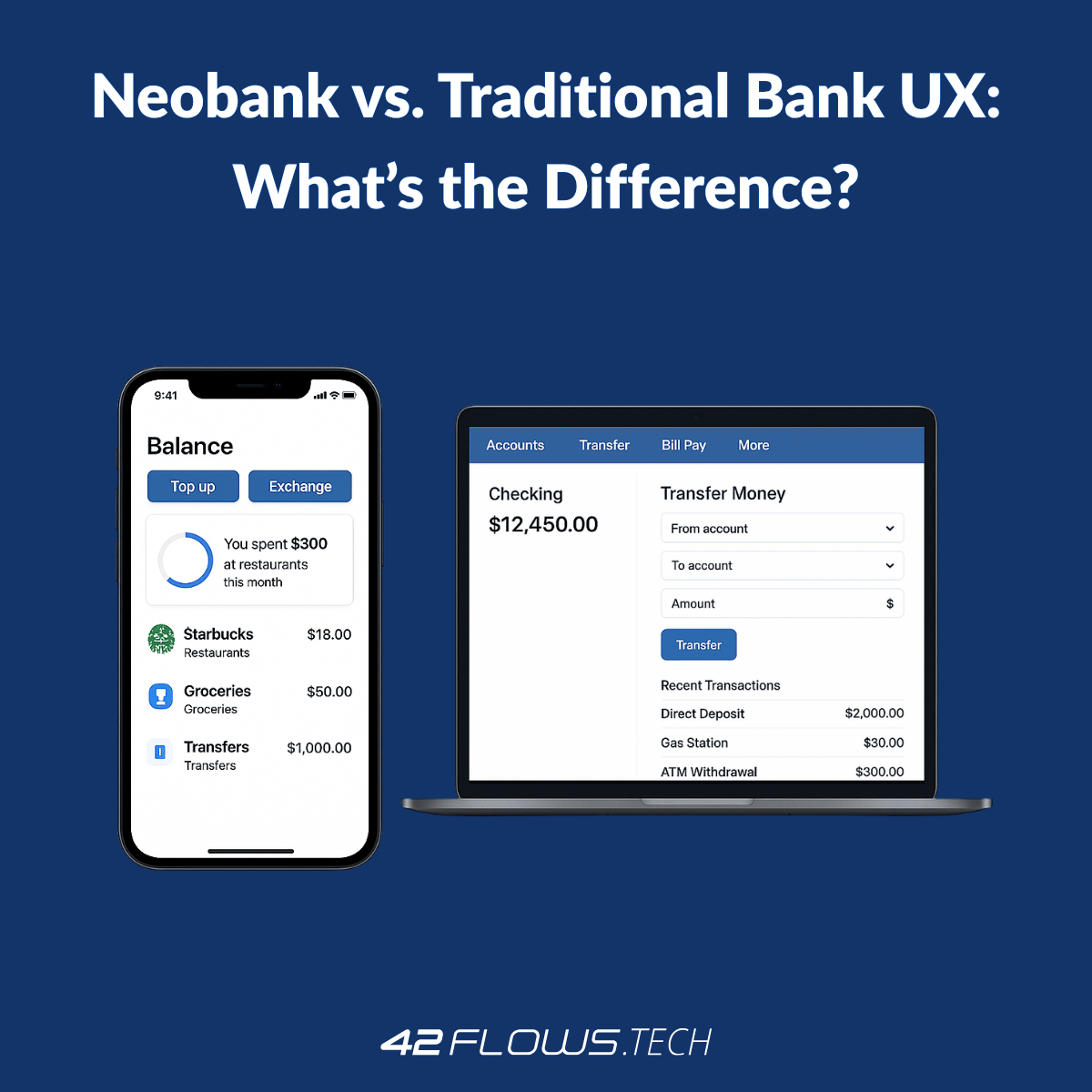
As digital banking services expand, the need for secure, high-performance API integrations has never been greater. Banks are no longer isolated financial entities—they now integrate with retailers, telecom providers, fintechs, and e-commerce platforms to offer embedded financial services. However, these integrations must handle millions of transactions daily while maintaining speed, security, and regulatory compliance.
A poorly designed API integration can result in slow processing times, security vulnerabilities, and even service outages, damaging both customer trust and regulatory standing. So, how can banks build API ecosystems that are both secure and scalable?
Drawing from real-world banking integrations, this article explores best practices, common challenges, and practical solutions for building high-load, secure, and future-proof API connections.
1. Why Banks Need Secure and Scalable API Integrations
1.1 The Growing Demand for API-Driven Banking
Modern banking depends on APIs to:
- Power embedded finance solutions in retail, telecom, and e-commerce.
- Support instant payments, digital wallets, and Buy Now, Pay Later (BNPL) services.
- Enable seamless data exchange in open banking ecosystems.
- Ensure compliance with PSD2, Open Banking, and other global regulations.
Without well-designed APIs, banks risk slow transaction speeds, security breaches, and integration failures that can result in financial losses and reputational damage.
1.2 Challenges of High-Load Banking APIs
- Real-Time Transaction Processing – APIs must handle thousands of transactions per second without delays.
- Security & Compliance – APIs are common attack points for cybercriminals and must comply with stringent banking regulations.
- System Downtime Risks – A failure in a banking API can disrupt core banking services, merchant transactions, and customer accounts.
- Legacy System Bottlenecks – Many banks still rely on outdated core systems that struggle to support modern, API-driven workloads.
2. Key Principles for Secure and Scalable Banking API Integrations
2.1 Prioritize Security at Every Layer
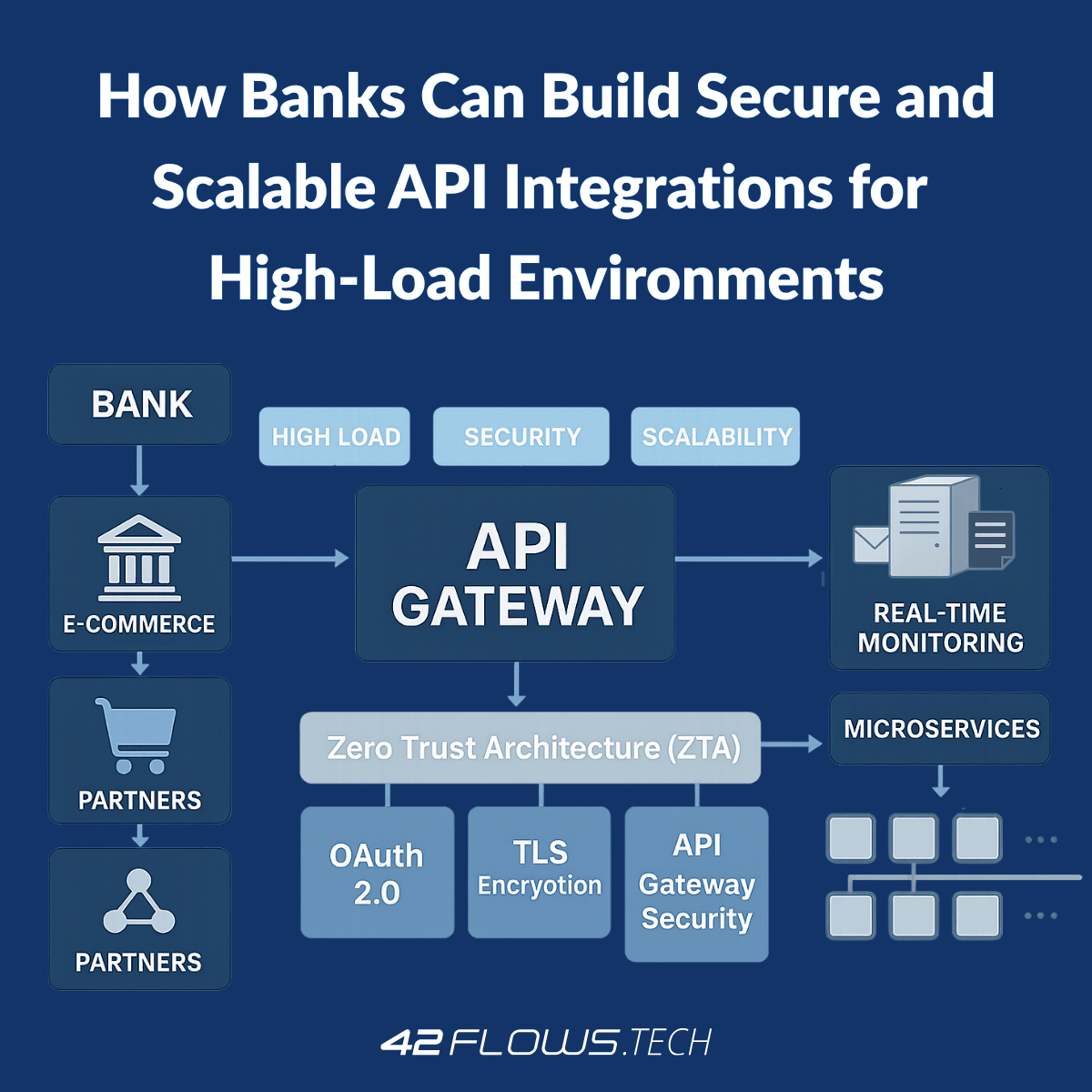
Banking APIs must follow Zero Trust Architecture (ZTA), ensuring that every transaction is verified, encrypted, and monitored.
- Strong Authentication & Authorization – Use OAuth 2.0, OpenID Connect, and multi-factor authentication (MFA) to prevent unauthorized access.
- End-to-End Encryption – Encrypt all API requests and responses using TLS 1.3 or higher.
- API Gateway Security – Implement rate limiting, IP whitelisting, and API firewalls to prevent attacks.
- Tokenization for Sensitive Data – Never expose raw customer data—use tokenized identifiers instead.
2.2 Design for High Availability and Scalability
A banking API must scale dynamically to handle fluctuating transaction volumes, especially during peak times (e.g., payday, Black Friday, market crashes).
- Microservices Architecture – Break APIs into modular, scalable services that can be independently deployed and updated.
- Load Balancing & Traffic Routing – Distribute API requests across multiple servers to prevent overloads.
- Asynchronous Processing – Use event-driven messaging (Kafka, RabbitMQ, or AWS SQS) to prevent API timeouts.
- Edge Computing & Caching – Reduce database queries by caching frequently accessed data (e.g., account balances, transaction history).
2.3 Ensure Real-Time Monitoring and Incident Response
A high-load banking API needs real-time visibility into performance, security threats, and potential failures.
- API Observability & Logging – Use distributed tracing (OpenTelemetry, Jaeger) and centralized logging (ELK, Splunk) to detect issues.
- AI-Powered Anomaly Detection – Implement machine learning to identify fraud attempts and performance bottlenecks.
- Automated Failover & Recovery – Set up self-healing systems that automatically redirect traffic if a service fails.
- Disaster Recovery Plan (DRP) – Regularly test API backup and restore processes to ensure minimal downtime.
3. Best Practices from Real-World Banking API Integrations
Case Study 1: API Optimization for Instant Payments
The Challenge:
A European bank integrated with multiple payment providers but faced delays in transaction processing due to API bottlenecks.
The Solution:
- Moved from synchronous API calls to an event-driven architecture.
- Implemented batch processing for high-volume transactions.
- Introduced intelligent load balancing to route requests efficiently.
The Result:
- Reduced transaction processing time by 70%.
- Eliminated API timeouts during peak hours.
Case Study 2: Securing Open Banking Integrations
The Challenge:
A retail bank launching an Open Banking API struggled with security risks and compliance with PSD2 regulations.
The Solution:
- Implemented OAuth 2.0 with token-based authentication.
- Enforced data encryption and API gateway security policies.
- Deployed AI-powered fraud monitoring for API requests.
The Result:
- Achieved PSD2 compliance without performance degradation.
- Prevented over 5,000 fraudulent API access attempts per month.
Case Study 3: Handling High-Load E-Commerce Transactions
The Challenge:
A bank partnered with a leading e-commerce platform to power embedded payments but struggled with API downtime during peak sales events.
The Solution:
- Introduced horizontal scaling with auto-scaling groups.
- Used edge caching for transaction verification to reduce API response times.
- Implemented failover mechanisms to switch between primary and secondary API nodes.
The Result:
- 99.99% API uptime during Black Friday and holiday sales.
- Improved transaction speed by 50%.
4. The Future of Banking API Integrations
The next wave of banking API innovation will focus on:
- AI-Driven Fraud Prevention – Using AI to detect fraudulent API activity in real time.
- Decentralized Finance (DeFi) Integrations – Securely connecting banks with blockchain-based financial services.
- Federated Identity Management – Enabling seamless authentication across multiple banking partners.
- Quantum-Safe API Encryption – Preparing APIs for future quantum computing threats.
Banks that invest in secure, scalable API infrastructures today will gain a competitive edge in embedded finance, open banking, and real-time payments.
Conclusion
High-performance API integrations are the backbone of modern banking. However, without proper security, scalability, and monitoring, banks risk service disruptions, compliance violations, and cyber threats.
By following best practices in authentication, microservices, real-time monitoring, and intelligent scaling, financial institutions can build robust API ecosystems that handle millions of transactions securely and efficiently.
At 42Flows, we help banks design and implement secure, high-load API integrations that power seamless financial services.
Need to optimize your banking API architecture? Let’s talk. Contact us at success@42flows.tech to get started.




 Maksym Popov